Quick answer: The RTX 5060 Ti (16GB) is the better AI GPU despite being the cheaper card. Its 4GB VRAM advantage over the RTX 5070 (12GB) matters more for AI workloads than the 5070’s faster compute, because models that do not fit in VRAM do not run at all.
Check NVIDIA GeForce RTX 5060 Ti on Amazon→Buy on Shopee SG→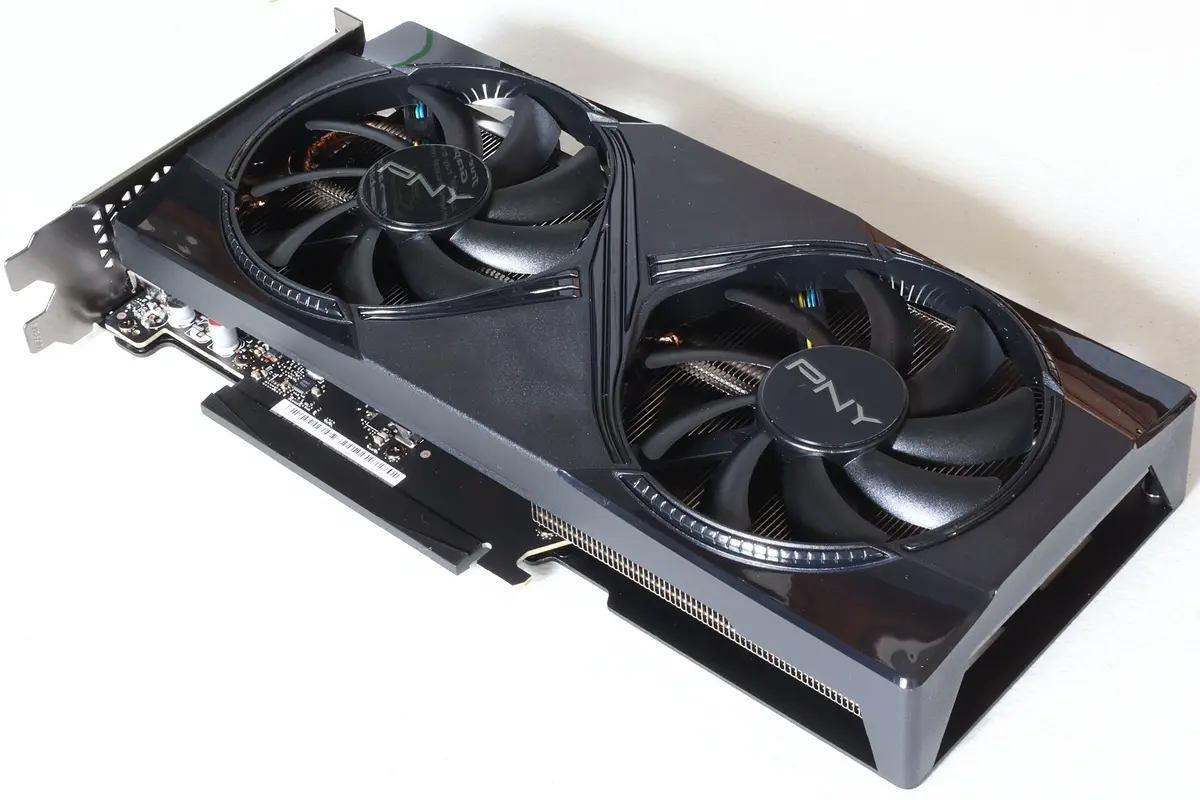
Specs comparison
| Spec | RTX 5060 Ti | RTX 5070 |
|---|---|---|
| VRAM | 16GB GDDR7 | 12GB GDDR7 |
| Memory Bandwidth | 448 GB/s | 672 GB/s |
| CUDA Cores | 4,608 | 6,144 |
| Architecture | Blackwell | Blackwell |
| TDP | 180W | 250W |
| FP16 Performance | ~45 TFLOPS | ~65 TFLOPS |
| Expected Price | ~$630 | ~$875 |
The bandwidth, core counts and board power above are NVIDIA’s published figures, from its GeForce graphics card comparison — exact, not estimates, which is why they carry no tilde. Only the prices do: those are street prices and they move.
The RTX 5070 is roughly 40% faster in raw compute and has 50% more memory bandwidth. The RTX 5060 Ti has 33% more VRAM. For gaming, the 5070 wins easily. For AI, the calculation is different.
Why VRAM matters more than speed for AI
AI workloads have a hard VRAM floor. If a model needs 14GB, a 12GB card cannot run it at all — no amount of compute speed helps. A 16GB card runs it slowly but successfully.
This distinction affects real workflows:
| Workload | 12GB (RTX 5070) | 16GB (RTX 5060 Ti) |
|---|---|---|
| 7B LLM (Q4 quantized) | Runs well | Runs well |
| 7B LLM (FP16 full) | Does not fit | Fits comfortably |
| 13B LLM (Q4 quantized) | Tight, may OOM | Comfortable |
| SDXL + ControlNet | Tight | Comfortable |
| Flux dev | Barely fits | Comfortable |
| Flux + ControlNet | Does not fit | Tight but works |
| AnimateDiff (SD 1.5) | Works | Works |
| LoRA fine-tuning (7B) | Limited | Workable |
The 5060 Ti opens up an entire tier of workloads that the 5070 simply cannot run.
Where the RTX 5070 wins
The 5070 is the better card when the model fits in 12GB:
- Inference speed — ~40% faster tokens per second for quantized models that fit in VRAM
- Image generation — Stable Diffusion 1.5 and base SDXL run faster on the 5070
- Memory bandwidth — 672 GB/s vs 448 GB/s means faster model loading and inference
- Gaming — significantly better for mixed gaming and AI use
If your AI work stays within 12GB — running quantized 7B models, generating SD 1.5 images, light experimentation — the 5070 is faster at those tasks.
Where the RTX 5060 Ti wins
The 5060 Ti is the better card when VRAM is the bottleneck:
- Flux image generation — needs 12GB minimum, 16GB recommended
- 13B quantized models — comfortable on 16GB, risky on 12GB
- SDXL with ControlNet stacking — multiple ControlNets push past 12GB
- LoRA fine-tuning — training requires more VRAM headroom than inference
- Future-proofing — models keep getting bigger, not smaller
Price-to-VRAM comparison
| Metric | RTX 5060 Ti | RTX 5070 |
|---|---|---|
| Price | ~$630 | ~$875 |
| VRAM | 16GB | 12GB |
| VRAM per $1,000 | 25.4 GB | 13.7 GB |
| Cost per TFLOPS | ~$14/TFLOPS | ~$13.5/TFLOPS |
The 5060 Ti delivers 85% more VRAM per dollar, up from 63% before the 2026 repricing. The other half of that trade has all but vanished: the 5070 once cost 15% less per TFLOPS, and now costs under 4% less. What used to be a genuine choice between capacity and compute value is now capacity at almost no premium.
Alternatives to consider
Before deciding between these two, check if other cards suit you better:
- RTX 5070 Ti (16GB, ~$1,050) — the same 16GB as the 5060 Ti with twice the memory bandwidth, which is the comparison this one usually turns into. We take it apart in RTX 5060 Ti vs RTX 5070 Ti for AI.
- RTX 4060 Ti 16GB (~$425) — previous-gen but same 16GB VRAM at a materially lower price. Slower compute but works for the same VRAM-bound workloads. If you are also considering the even cheaper RTX 3060 12GB relaunch, see our RTX 5060 Ti vs 3060 for AI comparison.
- RTX 4070 Ti Super (16GB, ~$800) — proven 16GB card with strong compute. Worth considering over both if you find a good deal.
Which GPU should you buy?
Buy the RTX 5060 Ti if AI is your primary use case. The 16GB VRAM lets you run 13B quantized models, Flux image generation, and LoRA fine-tuning — all workloads that fail or choke on 12GB. At $630, it is also $245 cheaper. For a full rundown of what this card can handle across different AI workloads, see our RTX 5060 Ti AI performance guide.
Buy the RTX 5070 if you primarily game and only dabble in AI with small models. The 40% compute advantage makes a big difference in games, and 12GB is enough for 7B quantized inference and basic Stable Diffusion.
Consider the RTX 5070 Ti if your budget stretches to $1,050. It gives you 16GB VRAM with the 5070-class compute, combining the best of both cards compared here.
Common mistakes to avoid
- Choosing the 5070 for AI because it is the “better” card. In gaming terms, the 5070 is faster. In AI terms, the 5060 Ti’s extra 4GB VRAM matters more than speed for most workloads.
- Assuming 12GB is enough because your current model fits. Model sizes grow fast. A card that runs today’s 7B model comfortably will struggle with the 13B models you want to try next month.
- Ignoring quantization requirements. Running a 13B model at Q4 on 12GB leaves almost no headroom for context. One long conversation can cause an out-of-memory crash.
- Skipping the 5070 Ti as an alternative. The $420 premium over the 5060 Ti buys you 16GB VRAM plus significantly more compute — it is the best mid-range AI value if you can afford it.
Our recommendation
Check NVIDIA GeForce RTX 5060 Ti on Amazon→Buy on Shopee SG→ Check NVIDIA GeForce RTX 5070 on Amazon→Buy on Shopee SG→For AI workloads: buy the RTX 5060 Ti. The 16GB VRAM opens up significantly more AI workflows than the 5070’s 12GB, and the $245 savings is no longer a rounding error. The 5070’s speed advantage only matters when your model fits in 12GB — and increasingly, the models people want to run do not.
Buy the RTX 5070 if you primarily game and do light AI work on the side with small quantized models. The faster compute and bandwidth will serve you better for gaming, and 12GB handles basic AI experimentation.
In AI, VRAM is the floor and compute is the ceiling. Buy for the floor first — you can always wait longer for a generation, but you cannot run a model that does not fit.
Common questions about the RTX 5060 Ti vs RTX 5070
Which is better for AI, the RTX 5060 Ti or the RTX 5070?
The RTX 5060 Ti 16GB, despite being roughly $245 cheaper. Its 4 GB VRAM advantage matters more for AI than the 5070’s faster compute, because models that do not fit in VRAM do not run at all. The 5060 Ti handles 13B quantized LLMs, Flux image generation, and LoRA fine-tuning — workloads that fail or choke on 12 GB.
Is the RTX 5060 Ti 16GB better than the RTX 5070 12GB for LLMs?
Yes, if local LLMs are a priority. A 13B model at Q4 quantization sits comfortably in 16 GB but is tight on 12 GB, where one long conversation can trigger an out-of-memory crash. The 5070 is roughly 40% faster on quantized 7B models that fit in its VRAM, but the 5060 Ti opens up a whole tier of models the 5070 cannot hold.
When is the RTX 5070 the better buy?
When you primarily game and only dabble in AI with small models. The 5070’s compute advantage is significant in games, and its higher memory bandwidth makes it faster at SD 1.5 and base SDXL generation. If your AI work stays within 12 GB — quantized 7B inference and light experimentation — the 5070 is the quicker card at those tasks.
Should I get the RTX 5060 Ti 16GB or the RTX 5070 Ti 16GB?
If your budget stretches to roughly $1,050, the RTX 5070 Ti is the best mid-range AI value: it pairs the same 16 GB VRAM with significantly more compute, combining the strengths of both cards compared here. If $630 is the ceiling, the 5060 Ti still runs the same VRAM-bound workloads — just noticeably slower.